
Tungsten Carbide vs Powder Metallurgy Steel (ASP23) for Precision Stamping Punches — Wear Life & Chipping Analysis
Comprehensive engineering selection guide between Tungsten Carbide (CD650/V30) and Powder Metallurgy steel (ASP-23/CPM 10V) for high-speed precision stamping dies.
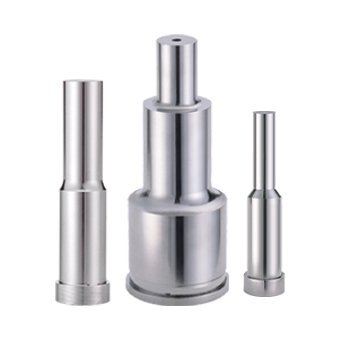
In modern high-speed progression tooling for motor laminations, lead frames, and micro-terminals, tooling engineers constantly face a pivotal choice: should punches be machined from Tungsten Carbide or Powder Metallurgy (PM) High-Speed Tool Steel? Choosing incorrectly either drives tooling costs unnecessarily high or causes premature chipping that stops the press line.
1. Material Fundamentals: Carbide vs. PM Tool Steel
Both materials provide substantial performance leaps over conventional ingot-cast tool steels (such as SKD11 or standard M2), but their metallurgical structures solve different engineering problems:
- Tungsten Carbide (Cemented Carbide / WC-Co): Composed of ultra-fine tungsten carbide grains bonded with a cobalt matrix (typically 12% to 15% Co for stamping grades like CD650 or V30). It achieves an extreme hardness of HRA 88–91 with unmatched compressive rigidity, delivering over 10 million cycles between sharpenings when blanking silicon steel.
- Powder Metallurgy High-Speed Steel (ASP23 / CPM 10V / Vanadis 4): Produced via gas atomization followed by hot isostatic pressing (HIP). This eliminates massive carbide segregation, creating an isotropic microstructure that provides exceptional impact toughness while still maintaining HRC 62–66 hardness.
2. Direct Performance Comparison Matrix
| Performance Metric | Standard High-Speed Steel (M2) | Powder Steel (ASP-23 / CPM 10V) | Tungsten Carbide (CD650 / V30) |
|---|---|---|---|
| Hardness Range | HRC 62–64 | HRC 64–66 | HRA 89–91 (~HRC 73–76 equiv.) |
| Impact Toughness | Moderate | Very High (2.5x M2) | Low to Moderate (Prone to chipping under shock) |
| Abrasive Wear Resistance | Baseline (1.0x) | 3.0x – 5.0x | 10.0x – 20.0x |
| Lateral Side-Load Sensitivity | Tolerant | High Resistance | Extremely Sensitive (Requires rigid guiding) |
3. Preventing Premature Chipping in Tungsten Carbide Punches
Tungsten carbide possesses extraordinary compressive strength but lower tensile and shear resistance. When carbide punches fail prematurely, the root cause is almost always:
- Wire EDM Recast Layer (White Layer): Electrical discharge machining creates a micro-cracked recast layer on the cutting edge. Countermeasure: Follow wire cutting with optical profile grinding (PG) or chemical etching/polishing to remove 0.01–0.02 mm of surface material.
- Guide Post Play: Even 0.01 mm of guide bushing clearance will allow punch misalignment under dynamic stamping shock, causing edge chipping. Carbide punches strictly require preloaded ball bearing cage guide sets.
- Tip Edge Chamfering: Honing the razor-sharp cutting edge with a diamond stone to create a tiny micro-radius (R0.01–0.02 mm) prevents micro-spalling during initial break-in.
CUSTOM DRAWING FABRICATION · FAST RFQ
Need a Precise Quote for Custom Mold Components?
YZX Precision specializes in tight-tolerance punches, ejector pins, and guide sets holding ±0.002mm. Upload your STEP, DWG, or PDF drawing for a rapid quotation within 2 business hours.
 Chat on WhatsApp